
In brief. An egg combines water, protein, fat and several micronutrients, but the figures vary with size, preparation and the database used.
Calling an egg “complete” or “nutrient-dense” is not enough to understand what is on the plate. We need to know the portion, whether the egg is raw or cooked, and whether the numbers refer to 100 grams or one egg. ANSES’s Ciqual table and comparable public databases compile average analyses. They offer a useful reference, not a laboratory certificate for a particular carton. That distinction lets Mamati explain the food accurately without borrowing certainty that the evidence does not provide.
A food matrix made mostly of water
Egg white is mainly water with proteins dispersed through it. Yolk also contains water, but it has more fat and solids. When values are reported per egg, size therefore matters: a larger egg normally means more edible mass, not a fundamentally different food.
Cooking changes texture and may remove or redistribute water. That is why raw, boiled and poached entries can differ slightly per 100 grams. Oil, butter, cheese and salt added to a recipe usually change the finished dish more substantially than the cooking of the egg itself.
Protein is shared by white and yolk
The white is rightly known as a protein-rich fraction with little fat. The yolk also provides part of the egg’s protein. Removing every yolk therefore removes more than fat: it also removes protein and a range of micronutrients concentrated in that fraction.
Protein quality is not captured by one number. Amino-acid profile, digestibility and total daily intake all matter. Eggs can contribute alongside pulses, dairy foods, fish, meat and other locally available sources rather than being treated as the only useful option.
Fat, dietary cholesterol and micronutrients
Fat is concentrated in the yolk and includes several kinds of fatty acids as well as dietary cholesterol. That fact alone cannot predict how one person’s blood cholesterol will respond to a meal. Current guidance places greater emphasis on the overall pattern, including saturated fat and food diversity.
The yolk also contributes vitamins and minerals listed in official composition tables. Presence does not equal treatment: one food does not automatically correct a deficiency. Portion, cooking, individual needs and everything else eaten during the week remain relevant.
Why reputable sources show different numbers
Databases may analyse different samples, sizes or cooking methods. Hen feed and age can influence some components as well. A modest difference between two tables is not necessarily a mistake and certainly not proof that one brand is superior.
When comparing products, use the same unit and source. When planning a meal, look at the real serving and its companions. A vegetable omelette made with a small amount of oil is not nutritionally equivalent to an omelette loaded with cheese and served with salty processed meats.
From a database entry to an everyday portion
A useful way to apply composition data is to start with the egg actually used, then add the rest of the recipe. A 100-gram table entry may represent roughly two eggs, depending on size, while a household portion may contain one, two or more. The table is the starting point for an estimate, not the end of the calculation.
Public databases also update when sampling or methods improve. A revised value does not mean yesterday’s egg changed; it may mean the estimate became more representative. Recording the source and access date keeps comparisons transparent.
How to read the evidence without stretching it
A food-composition table reports averages from samples; it does not guarantee the value of every egg. An intervention study observes a defined group, for a defined period, within a particular meal or diet. That is not enough to turn one food into a treatment. We therefore separate three levels of evidence: what composition analysis measures directly, what a short trial may suggest, and what public-health guidance concludes for an overall eating pattern. Egg size, hen feed, cooking and the foods served alongside the egg can all change the practical interpretation.
This article does not assign a special nutrient level to Mamati eggs because no lot-specific laboratory result has been supplied for that purpose. Reference data describes eggs in general. Any future product claim should state the method, lot, unit and analysis date.
Practical pointers
Start a nutrition label by checking whether it describes one egg, 100 grams or a complete recipe. Then check added ingredients. Finally, compare the figures with your usual diet and needs rather than with an idealised single food.
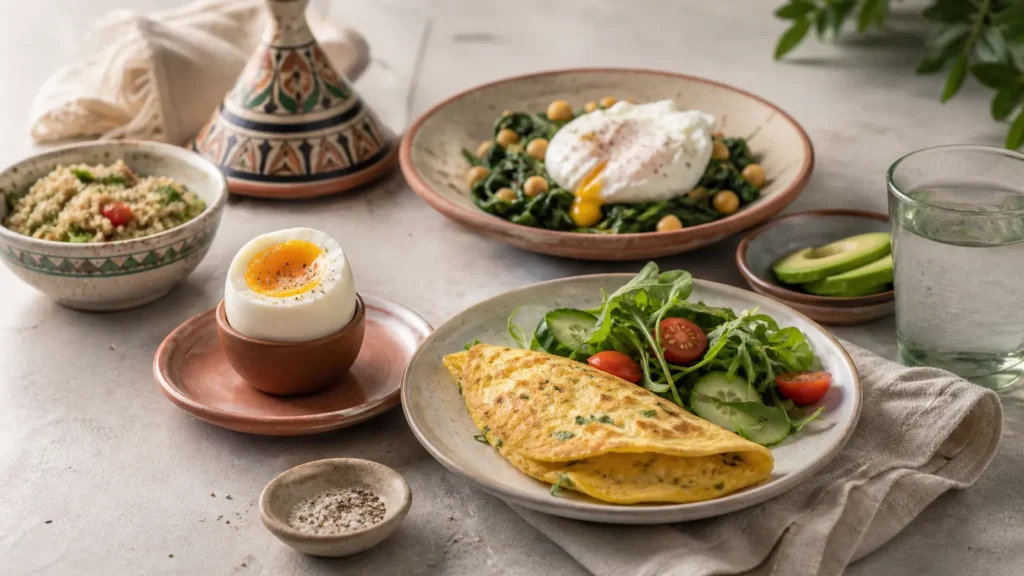
In everyday cooking, eggs can sit beside vegetables, whole grains or pulses. That combination adds variety and avoids expecting one ingredient to perform every nutritional role.
Questions about formats, freshness or availability? Talk to Mamati on WhatsApp before ordering.
Sources reviewed
- La table de composition nutritionnelle du Ciqual — Anses (2025-11-19)
- Healthy diet — World Health Organization (2026-01-26)
- Dietary reference values — European Food Safety Authority (2024-08-05)