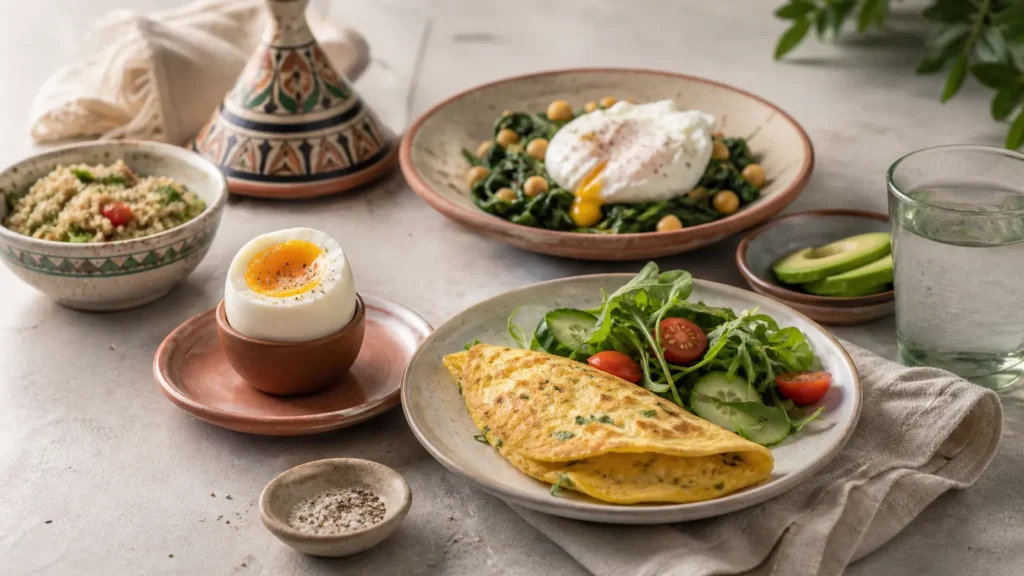

In brief. White contributes mainly water and protein; yolk concentrates fat and several micronutrients. Treating them as opponents hides how they complement each other.
White and yolk are often forced into a false contest: one is described as “clean” and the other as “too rich”. That framing removes the egg from its meal and recipe. The two fractions have different compositions and culinary functions, and both contribute protein. Eating them together or separately may suit a particular recipe or an individual plan, but it should not become a moral ranking between a good and a bad part.
White: water, proteins and cooking structure
Raw white is translucent because it consists largely of water and dissolved proteins. Heat unfolds and links those proteins, turning the white opaque and firm. Whisking traps air and creates a foam used in meringues and cakes. These physical changes explain its usefulness without creating extra nutrients.
Because white contains little fat, it can add protein to a recipe with limited fat. That does not make white-only meals automatically necessary or superior for a healthy person. The result depends on the complete meal, quantity and reason for making the change.
Yolk: a naturally complex emulsion
Yolk contains fat, dietary cholesterol, protein and several micronutrients. Its structure helps water and oil remain mixed in a sauce. In baking and cooking it provides colour, richness and binding, so its value cannot be reduced to calories.
Removing yolk lowers the fat in a dish but also removes some protein and many compounds located in that fraction. A useful adjustment for one recipe should not be promoted as a universal rule.
Protein does not live on one side
The claim that all egg protein sits in the white is false. White supplies a large share, while yolk also contains protein. Exact proportions depend on the weight of each fraction and the database. Comparing one whole white with 100 grams of yolk creates a meaningless result.
Protein reference values apply across the day and vary with age, body weight and physiological status. Eggs are one possible contributor among many; every meal does not need to maximise a single nutrient.
Raw, cooked or whipped changes the experience
Proper cooking improves texture and supports food safety. Although heat can affect the availability of certain compounds, the practical comparison must still include added oil, sugar and other ingredients.
Raw white is not a recommended shortcut to “absorb more protein”. It adds the microbiological risk associated with raw egg and offers no clear reason to ignore cooking or pasteurised products in recipes that would otherwise remain raw.
Using each fraction without unnecessary waste
Separating an egg for pastry or sauce often leaves one fraction unused. Planning the next dish can reduce waste: a cooked yolk may enrich a sauce, while whites can be cooked into an omelette or used in baking. Both fractions should be transferred to clean covered containers, chilled promptly and kept away from ready-to-eat food.
Food-safety guidance matters more than a clever reuse idea. If storage conditions or time are uncertain, discard the leftover rather than relying on smell. For dishes served raw or lightly cooked, a pasteurised product is the safer technical choice where available.
How to read the evidence without stretching it
A food-composition table reports averages from samples; it does not guarantee the value of every egg. An intervention study observes a defined group, for a defined period, within a particular meal or diet. That is not enough to turn one food into a treatment. We therefore separate three levels of evidence: what composition analysis measures directly, what a short trial may suggest, and what public-health guidance concludes for an overall eating pattern. Egg size, hen feed, cooking and the foods served alongside the egg can all change the practical interpretation.
Composition tables report white, yolk and whole egg separately, but portions and methods vary. We therefore avoid striking percentages without a clear denominator. No lot-specific analysis of Mamati eggs is claimed here.
Practical pointers
Use the whole egg when you want balanced texture, flavour and simplicity. Separate it when the recipe requires it or when an individual plan calls for it. Chill unused fractions promptly and use them quickly.
One culinary option for a lighter omelette is a whole egg plus an extra white with vegetables. It is an option, not a prescription for everyone.
Questions about formats, freshness or availability? Talk to Mamati on WhatsApp before ordering.
Sources reviewed
- La table de composition nutritionnelle du Ciqual — Anses (2025-11-19)
- Dietary reference values — European Food Safety Authority (2024-08-05)
- What You Need to Know About Egg Safety — U.S. Food and Drug Administration