
In brief. Roasted carob can add dark colour, natural sweetness and toasted or fruity notes to drinks, cakes, biscuits, porridges and selected savoury sauces. It is not a one-for-one replacement for cocoa: carob pulp has a different flavour and composition, and ordinary powder does not bring cocoa butter. The reliable method is to define the job of the ingredient, begin with a small substitution and adjust sweetness, liquid and fat separately.
Start with the carob format
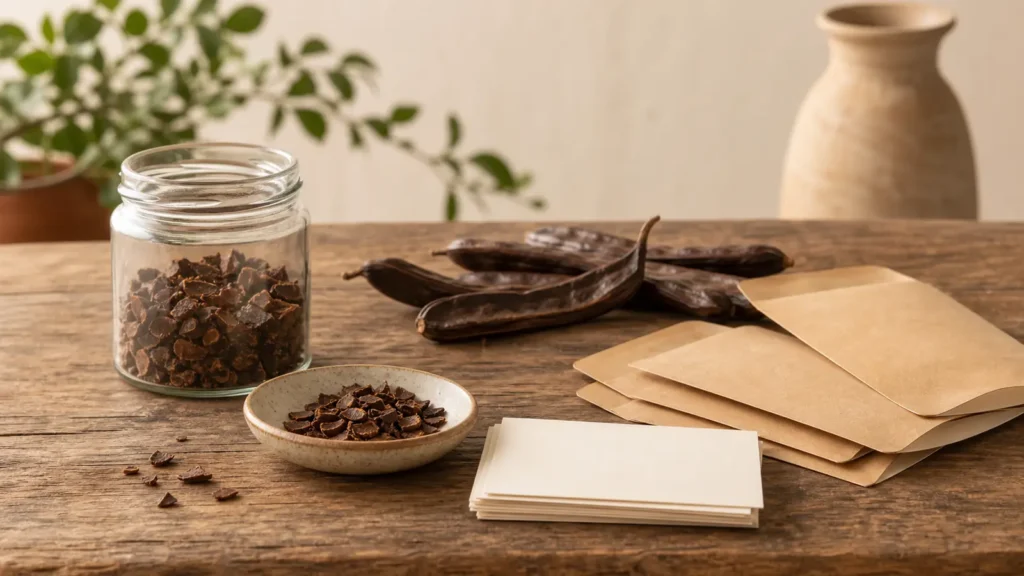
Fine roasted powder blends into batters and breakfast bowls, while coarse chips are better suited to infusion or a filtered stock. A syrup adds sweetness and water at the same time. These formats cannot share a single recipe ratio, so check the ingredient name, roast, particle size and any added ingredients before adapting a dish.
Taste the carob on its own. A fruit-forward light roast may suit an infusion, while a deeper roast can stand up in a biscuit. If the product already contains sugar or flavouring, the rest of the recipe must be adjusted and the complete ingredient list considered.
Why cocoa substitution is rarely one to one
Instrumental and sensory research confirms that roasted carob can develop some sweet and cocoa-like aroma, but it remains distinct. Cocoa powder may contribute more bitterness and, depending on the type, different acidity and fat. Carob pulp is naturally sweet and can make a recipe taste sweeter before any sugar is changed.
Replace a modest part of the cocoa in a familiar formula first rather than the whole amount. Record weights, not just spoonfuls, then assess colour, sweetness, bitterness, structure and aftertaste. Reduce added sugar only after tasting, because the necessary adjustment depends on the carob and the other ingredients.
Drinks and breakfast bowls
For a warm drink, whisk powder into a small amount of liquid to make a smooth paste before adding the rest, or prepare coarse carob as a strained infusion. Milk and plant drinks change body and may add allergens or sugar. Cinnamon, orange peel and ginger can complement the roast, but a clear base recipe makes later variations easier to compare.
In oats, yoghurt or a semolina-style preparation, begin with a small measured amount and let the mixture rest before deciding it needs more. Fine plant powders continue to hydrate. Note the serving size and toppings; dates, honey and sweetened yoghurt can make a naturally sweet carob recipe overly sugary.
Cakes, biscuits and breads
Carob works most predictably when added to a recipe with room for flavour variation: a marble cake, biscuit, muffin or enriched bread. Sift powder with dry ingredients to reduce lumps. If the batter becomes noticeably thicker, adjust liquid in small measured steps instead of assuming a universal correction.
Run a control and one or two variants. A simple evaluation after full cooling should cover rise, crumb, moisture, sweetness, colour and flavour on the next day as well as the first. This matters because a dramatic dark batter can taste milder once baked.
Savoury uses need restraint
A small amount of roasted carob can add colour and a sweet-brown note to a tomato-based sauce, glaze or spice rub. Pairing it with cumin, coriander seed, chilli, preserved lemon or vinegar may create balance. Start low: excess powder can make a sauce muddy, dusty or unexpectedly sweet.
A carob syrup can help a glaze brown, but it also affects viscosity and burning. Treat it as both sweetener and liquid. For professional service, record the complete recipe, allergens, batch time and holding conditions rather than describing the sauce as a secret natural ingredient.
Turn good experiments into usable recipes
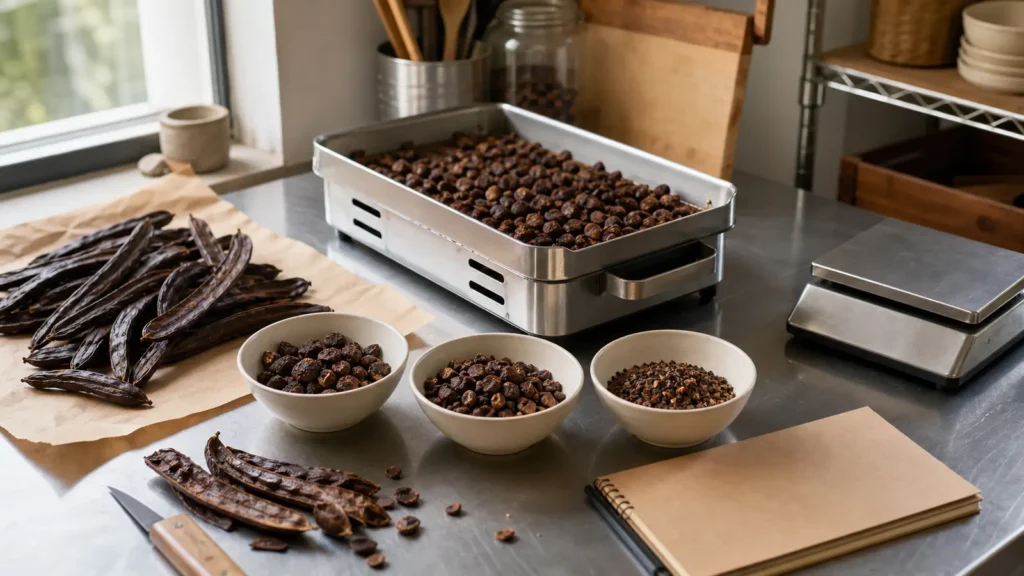
A development table should list every ingredient by weight, carob lot, process order, time, temperature, yield and tasting notes. Change one main variable per round. The recipe can then be reproduced by another cook and costed using the real finished yield.
Before Mamati publishes a pack recipe, it should be tested with the final product and realistic Moroccan kitchen equipment. A beautiful serving image should be labelled as a suggestion, not evidence that every result will look identical. Food-safety instructions must fit the complete dish, especially when it contains eggs or dairy.
A four-step substitution test
- Define whether carob should add aroma, colour, sweetness or body.
- Keep a control recipe and weigh every version.
- Adjust carob, sugar, liquid and fat as separate variables.
- Evaluate after cooking and again at the intended serving time.
Continue through Mamati Notes
Carob formats explained, The aroma of roasted carob, and Storing carob products provide the next practical steps. You can also browse Mamati products or return to Mamati Notes.
Sources, review and limits
This article draws on the sources listed below and was editorially reviewed on 28 July 2026. Recipe behaviour changes with roast, particle size, formulation and equipment; the article does not prescribe a universal substitution ratio. It offers general food and product-development information, not medical advice, a certification, a laboratory report for a Mamati lot, or a guarantee of commercial availability.
- Food Research International — Unveiling the cocoa–carob flavour gap in dark chocolates (2024)
- Journal of Advanced Research — Volatiles profiling in carob and its response to roasting (2017)
- Arabian Journal of Chemistry — Sugar composition and yield of syrup production from the pulp of Moroccan carob pods (2016)
- Codex Alimentarius — General Principles of Food Hygiene (CXC 1-1969) (2022 revision)