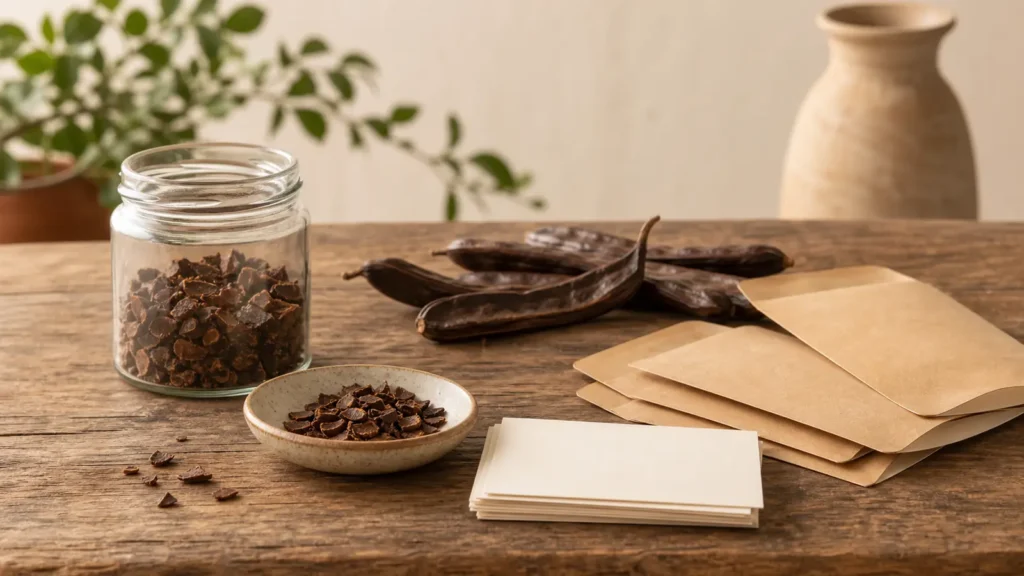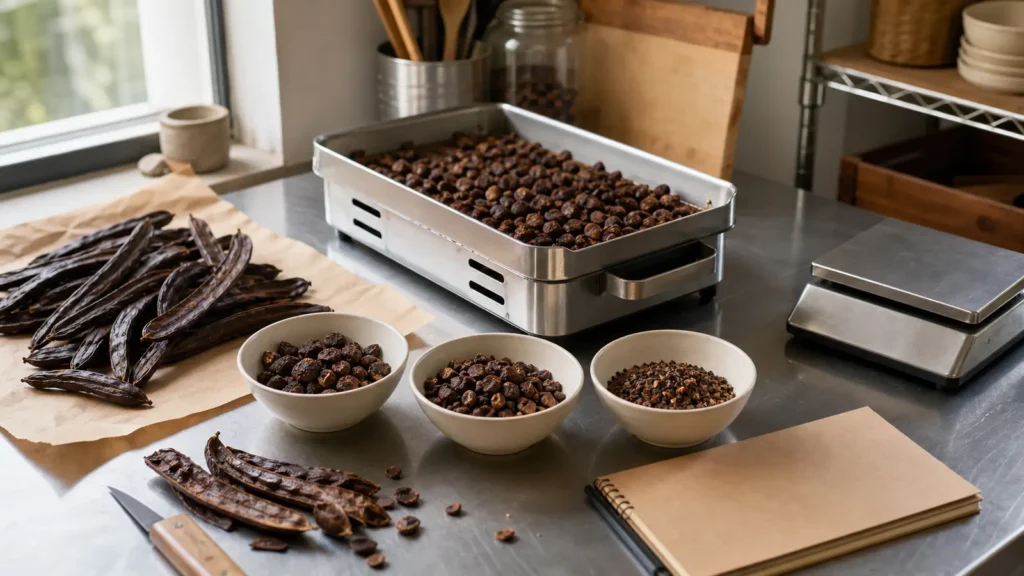

In brief. Carob products are not one storage category. Dry whole pods and roasted chips mainly need protection from moisture, pests, contamination and strong odours. Fine powder has more exposed surface and can clump or lose aroma after repeated opening. A concentrated syrup introduces water, filling and after-opening questions that require a validated process. The final manufacturer’s label takes priority over general advice.
Storage begins with an accepted batch
A container cannot rescue material that arrived mouldy, insect-damaged or unusually wet. Reception should include a documented visual and odour check plus any tests defined by the food-safety plan. Material under investigation stays identified and separated rather than being mixed into a sound lot.
Clean storage protects food from contamination and makes stock rotation possible. Codex hygiene principles emphasise controls across the operation, not only at the moment of packing. For Mamati, the room, pallets, shelves, utensils and pest-management records form part of the product system.
Whole pods and chips: keep them dry and identifiable
Dry pods and coarse pieces should be held in suitable closed food-contact packaging, off the floor and away from walls where inspection is difficult. The area should be clean, dry and protected from insects and rodents. Strong-smelling chemicals, spices or fuels can transfer unwanted odours.
Do not rely on the pod’s hard appearance. Moisture can enter through poor packaging or humid air, especially after a container is opened repeatedly. Lot code and reception or packing date should remain attached when material moves into a smaller working container.
Powder needs extra attention after opening
Milling increases exposed surface. Powder can pick up moisture, compact and lose aroma more readily than intact pieces. Use a clean, dry scoop and close the pack promptly. Pouring unused powder back from a preparation bench risks introducing crumbs, steam or allergens.
For a household, a pack size that is used within the labelled period may be better than a large bag opened for months. For a professional kitchen, decant only into a labelled food-grade container and retain the original batch and instructions. Never mix a new lot into remnants of an old one without a controlled system.
Syrup is a separate preservation problem
Concentration can reduce available water, but appearance and sweetness do not establish microbiological stability. The recipe, soluble solids, acidity, heat treatment, filling method, closure and packaging all affect durability. A homemade reduction cannot borrow the shelf life of a tested commercial syrup.
Before and after opening may require different conditions. Follow the label exactly, use clean utensils and avoid drinking from or returning food to the bottle. If Mamati develops a syrup, its refrigeration and use-after-opening instructions must come from validation of the final product and pack.
Dates and stock rotation should be meaningful
Moroccan labelling rules require relevant durability and storage information for foods within their scope. A date must be tied to defined conditions; printing a distant date because dry foods “last a long time” is not acceptable product development.
First-expiring, first-out rotation helps ensure older accepted stock is used in time. Record opening dates where useful, check packaging integrity and investigate unusual clumping, condensation, pests or odour. Disposal decisions should follow the food-safety procedure, not an attempt to hide loss.
What a future Mamati pack should explain
The label should identify the food, ingredients, net quantity, lot, operator, durability and storage or preparation instructions required for the actual format. A simple line such as “keep tightly closed in a cool, dry place” is only appropriate when the product evidence supports it.
Customer service should repeat the same instructions rather than inventing a new duration on WhatsApp. If packaging, supplier, roast or formulation changes, shelf-life evidence and wording may need review. Revision control keeps advice aligned with what is truly in the pack.
At home after opening
- Follow the pack, keep the lot and date readable, and close it promptly.
- Use clean, dry utensils and protect the product from steam and spills.
- Do not combine old and new packs in an unlabelled container.
- Report a damaged seal, insects, mould or abnormal odour instead of tasting.
Continue through Mamati Notes
Carob formats explained, Hot and iced carob infusion, and Preparing the first batch provide the next practical steps. You can also browse Mamati products or return to Mamati Notes.
Sources, review and limits
This article draws on the sources listed below and was editorially reviewed on 28 July 2026. No universal storage time is given because durability depends on format, process, packaging and validation of the specific product. It offers general food and product-development information, not medical advice, a certification, a laboratory report for a Mamati lot, or a guarantee of commercial availability.