
Carob
Pre-registration and preparing the first carob batch
A useful pre-registration measures format, pack and location preferences while Mamati prepares a limited, traceable first batch without false urgency.
Read the articleMamati Notes
Origin, processing, flavour and culinary uses of Moroccan carob.
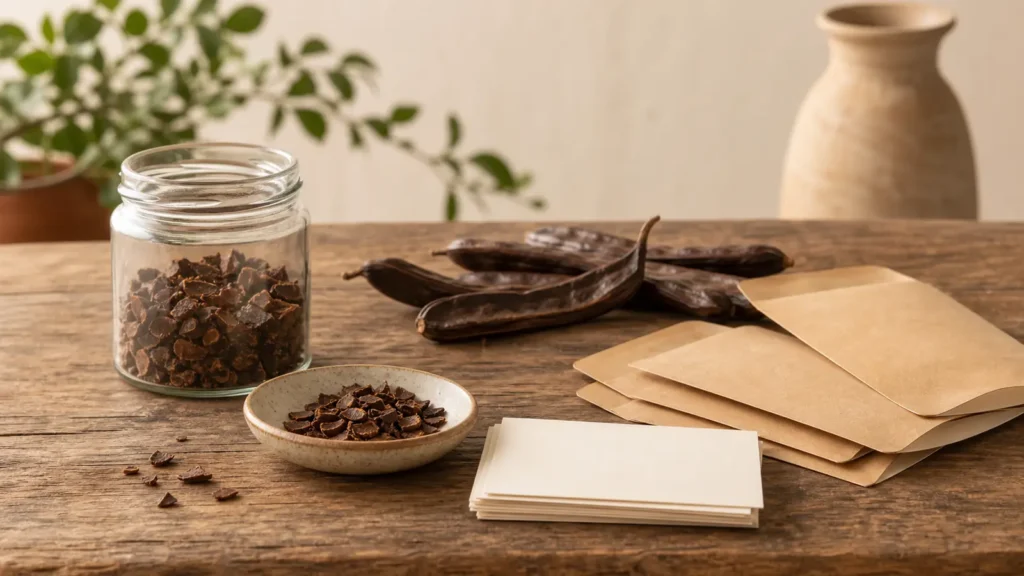
A useful pre-registration measures format, pack and location preferences while Mamati prepares a limited, traceable first batch without false urgency.
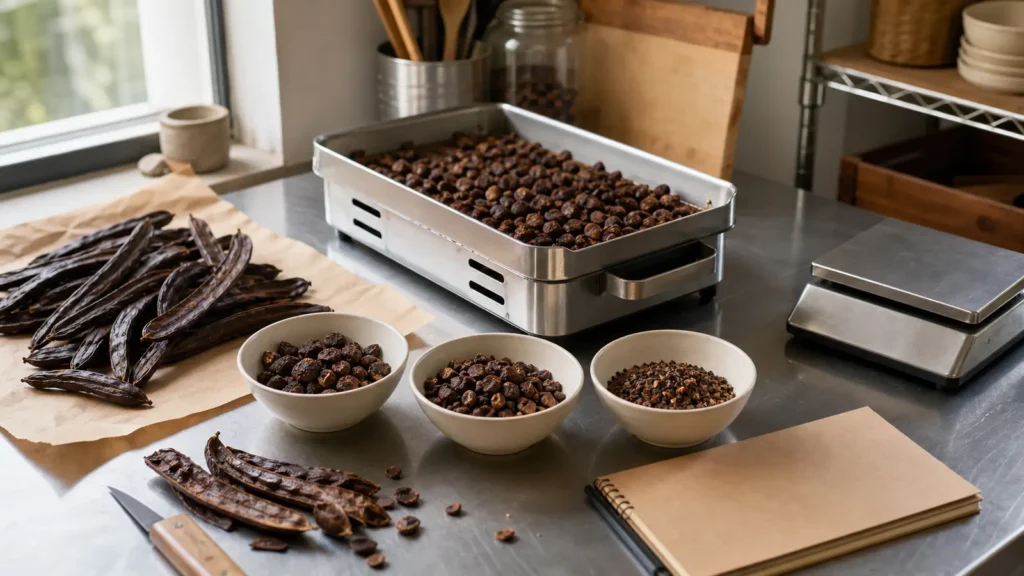
Mamati Kharroub is a product-development pilot: define the use, qualify pods, compare small batches and pass safety and label gates before sale.

Whole pods, roasted chips, powder and syrup respond differently to moisture, heat, light and repeated opening, so the product label must lead.

A credible Moroccan origin claim is built from suppliers, batch codes, quantities and transformation records—not a landscape image or an unsupported label.

Carob can flavour drinks, baking, breakfast bowls and sauces, but its sweetness, low fat and distinct roast mean substitutions need testing.

Roasted carob can suggest fruit, caramel, toast, wood and cocoa-like notes, but its profile depends on the pod, roast and tasting method.

Carob chips, culinary powder, concentrated syrup and locust bean gum come from different fractions and processes, so they cannot be used interchangeably.

A repeatable carob infusion starts with a measured dose, controlled roast, safe water and a clear method for hot service or rapid chilling.

Roasting changes carob’s colour and aroma, but temperature, time, piece size and cooling must be controlled rather than guessed.

Before carob becomes chips, powder or syrup, its maturity, origin, drying and sorting shape what processors can make from the pod.