
In brief. A carob infusion extracts colour, sweetness and toasted aroma from food-grade roasted pieces or a suitable coarse blend. There is no universal dose because roast, particle size and personal taste vary. The useful approach is to start with a measured trial, keep water and steeping conditions constant, then adjust one variable. An iced version should be brewed deliberately and chilled promptly rather than left for hours at room temperature.
Choose a format made for infusion
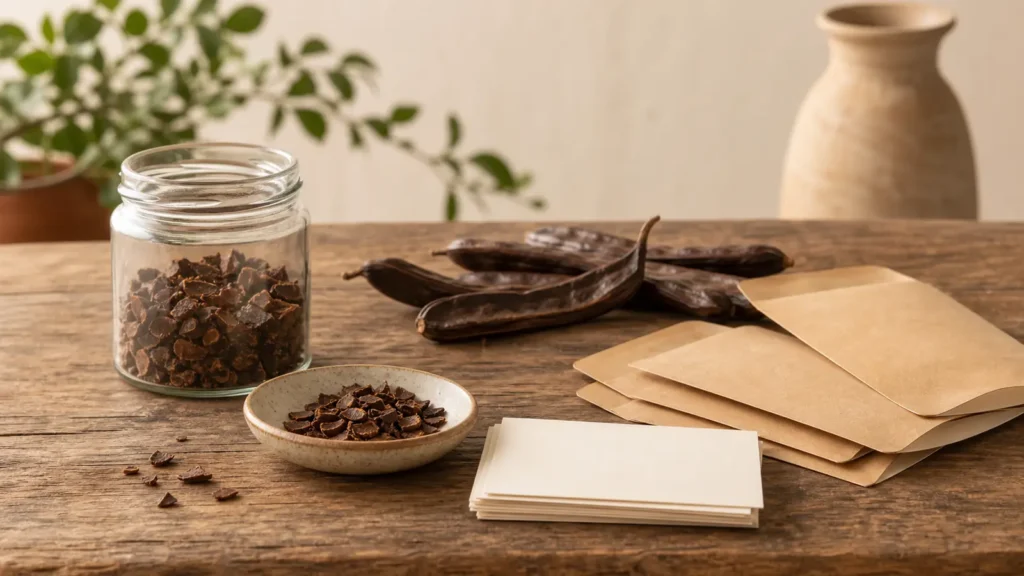
Coarse roasted pieces are easier to strain than fine powder. A powder can make a fuller drink, but suspended particles may settle or pass through a typical tea filter. Before brewing, confirm that the ingredient is intended for human consumption, smells clean and carries a batch or supplier reference.
Roast level changes the cup. A lighter roast may preserve fruitier or tangier notes; a deeper roast may emphasise toast, caramel-like impressions and bitterness. Published aroma studies explain why these shifts occur, but the actual taste must be checked on the specific blend.
Build a baseline recipe, not a rigid rule
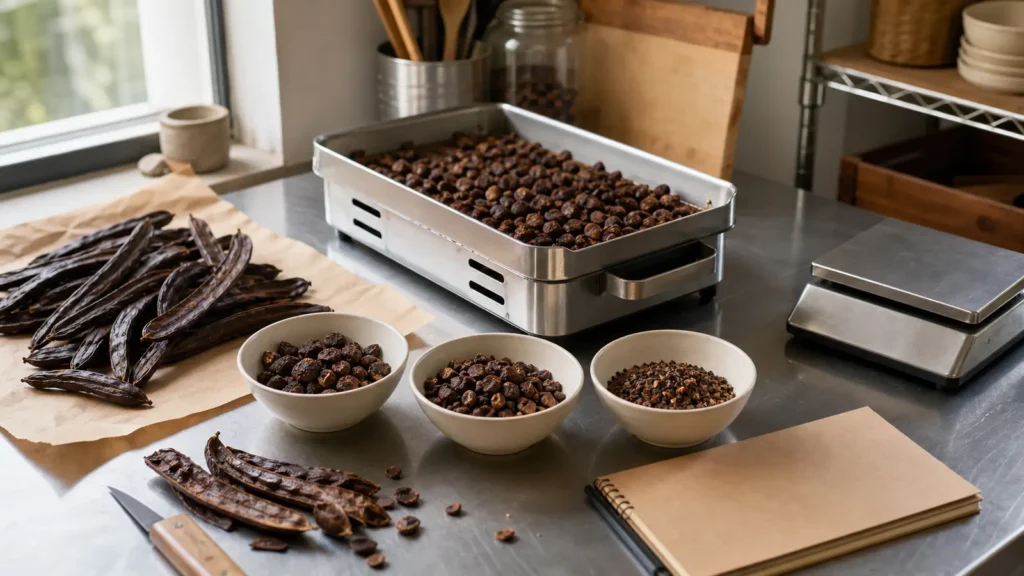
For development, weigh the carob and measure the water instead of relying on a spoon that changes with piece size. A practical first tasting can compare three doses around a moderate centre point, all brewed with the same water volume. The purpose is to map preference, not declare one medical or traditional dosage.
Record the product code, grams, water volume, water temperature and contact time. If every variable moves at once, a sweeter cup cannot be traced to more carob, hotter water or longer extraction. A simple sheet turns a pleasant experiment into a recipe that someone else can repeat.
Hot infusion step by step
Bring potable water to a suitable brewing temperature in clean equipment. Add the measured carob, cover to retain aroma and steep for the chosen time. Strain into a clean cup and taste first without sweetener. Carob pulp is naturally sweet, so added sugar may not be necessary.
If the cup is weak, change either dose or time in the next trial. If it is harsh, reduce extraction or try a lighter roast. Cinnamon, orange peel, anise or ginger can fit Moroccan preferences, but test the plain base first and list every added ingredient when serving other people.
Two sound ways to serve it iced
The first method is a stronger hot brew poured over a measured quantity of clean ice. This gives quick chilling but requires accounting for dilution. The second is a normal hot brew cooled rapidly in a shallow or chilled vessel and then refrigerated. In both cases, use potable water and hygienic utensils.
Do not treat slow cooling on a kitchen counter as a flavour technique. For a commercial trial, time and temperature controls should follow the food-safety plan. Prepare an amount appropriate for the service period, keep it covered and cold, and discard it when the validated holding period is reached.
Taste with a useful vocabulary
Ask tasters about sweetness, acidity, roast, fruit, caramel-like notes, bitterness, body and aftertaste. A five-point intensity scale is more informative than a single “like” button. Also record whether the drink was hot, warm or cold, because temperature changes aroma perception.
A small citrus peel can lift a heavy roast, while milk or a plant drink changes body and may introduce allergens. Those are separate recipes, not proof that the base infusion failed. Preserve one clear, unsweetened reference before building flavoured variations.
Serving honestly
An infusion can be presented as a caffeine-free option only if the carob ingredient and complete recipe contain no added caffeine source; cross-contact and mixed ingredients still need checking. It should not be promoted as a treatment for cough, digestion, blood sugar or any other condition.
For Mamati Kharroub, the final preparation instructions must follow the tested product format. Until dose, roast, packaging and durability are confirmed, this article is a development guide. The future pack should state ingredients, net quantity, storage and preparation in the languages required for the intended market.
A tasting card for one cup
- Record grams of carob, water volume, temperature and steep time.
- Taste the unflavoured cup before adding sugar or spices.
- For iced service, record ice or rapid-chilling method and service time.
- Note aroma, sweetness, acidity, bitterness, body and aftertaste.
Continue through Mamati Notes
How roasting changes carob, Carob formats explained, and Storing carob products provide the next practical steps. You can also browse Mamati products or return to Mamati Notes.
Sources, review and limits
This article draws on the sources listed below and was editorially reviewed on 28 July 2026. The suggested workflow is for recipe development; a commercial drink needs a validated food-safety and holding procedure. It offers general food and product-development information, not medical advice, a certification, a laboratory report for a Mamati lot, or a guarantee of commercial availability.
- Codex Alimentarius — General Principles of Food Hygiene (CXC 1-1969) (2022 revision)
- Journal of Advanced Research — Volatiles profiling in carob and its response to roasting (2017)
- Arabian Journal of Chemistry — Sugar composition and yield of syrup production from the pulp of Moroccan carob pods (2016)
- Kingdom of Morocco / ONSSA — Decree No. 2-12-389 on food labelling (2013)